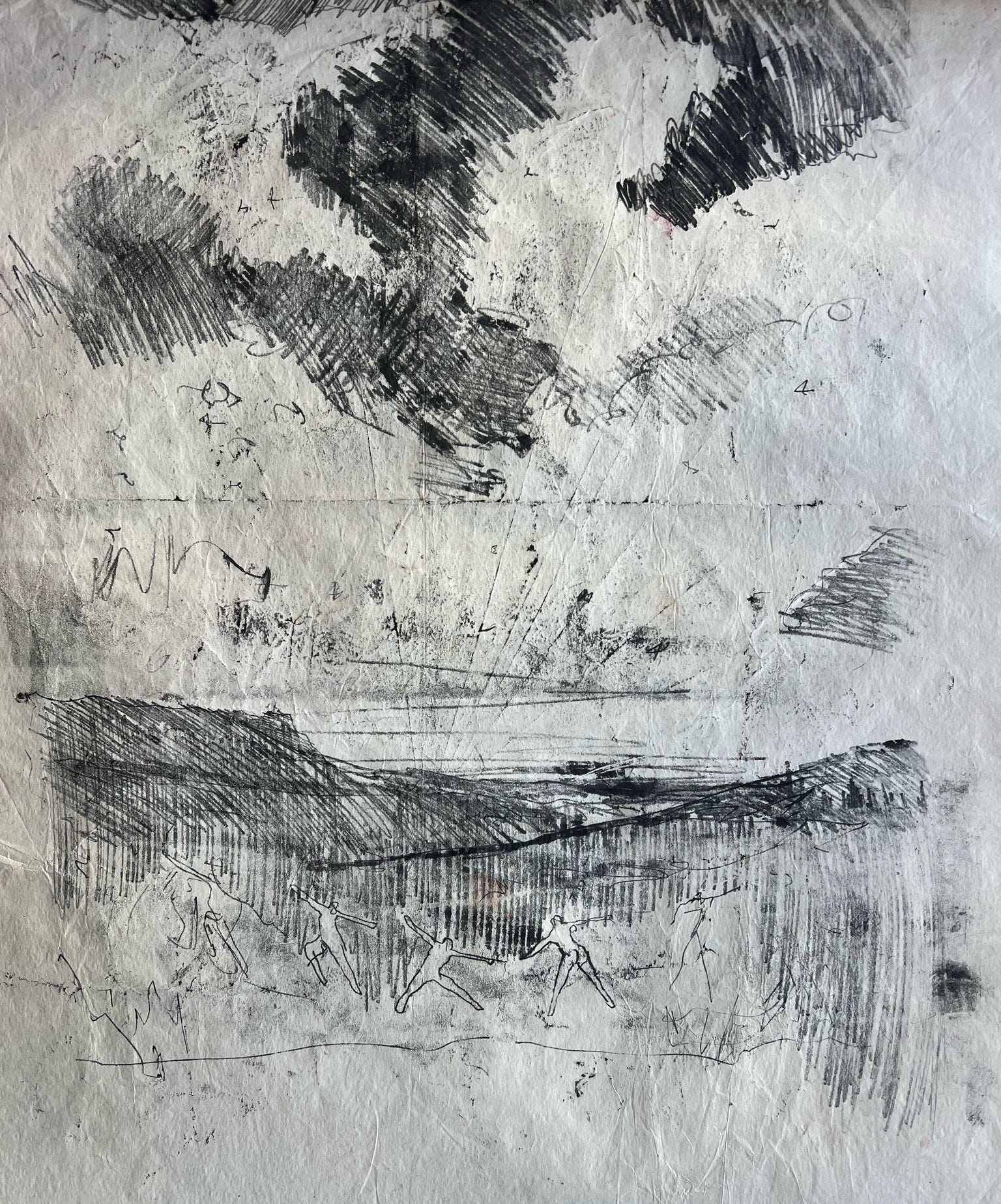
A Speculative Interview with Hugo Winder-Lind
A dialogue where boundaries between question and answer, fact and narrative, querent and artist dissolve.

Questions and narrative written by Hugo Winder-Lind, ‘answers’ written by Anna Moss.
Hugo Winder-Lind and I’s phone conversations often take place as he walks home from his studio on the coast of Brighton. This time, I joined him on an early walk between two points in a vast and empty landscape, shrouded by thick mist. I feel the layers between the borders are drifting in the middle distance — I can see only about 50 metres ahead of us. Hugo tells me we’re walking to a group of stones that jut out of a hill unmistakably, but I'm not sure he knows exactly where we are at this point.
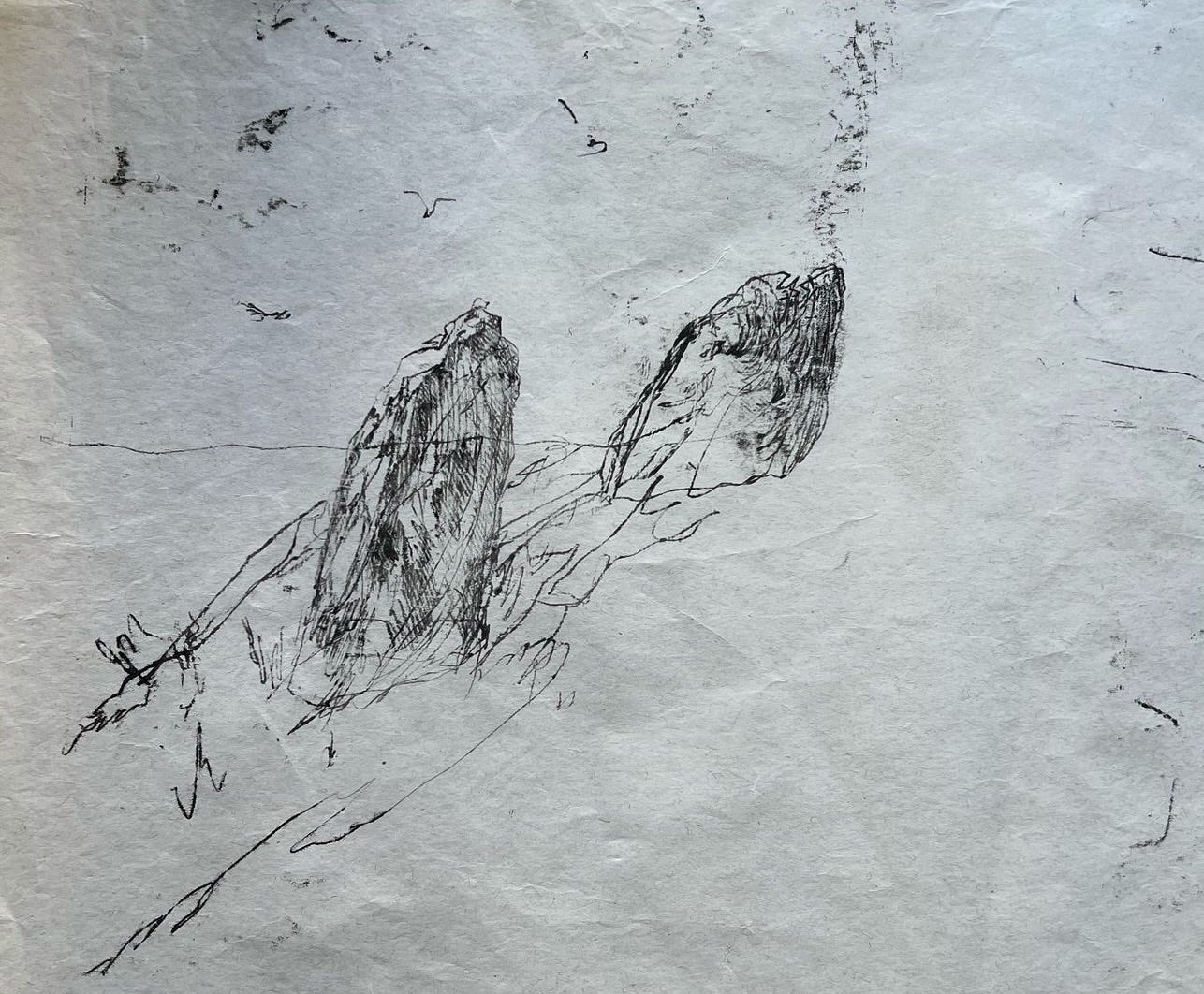
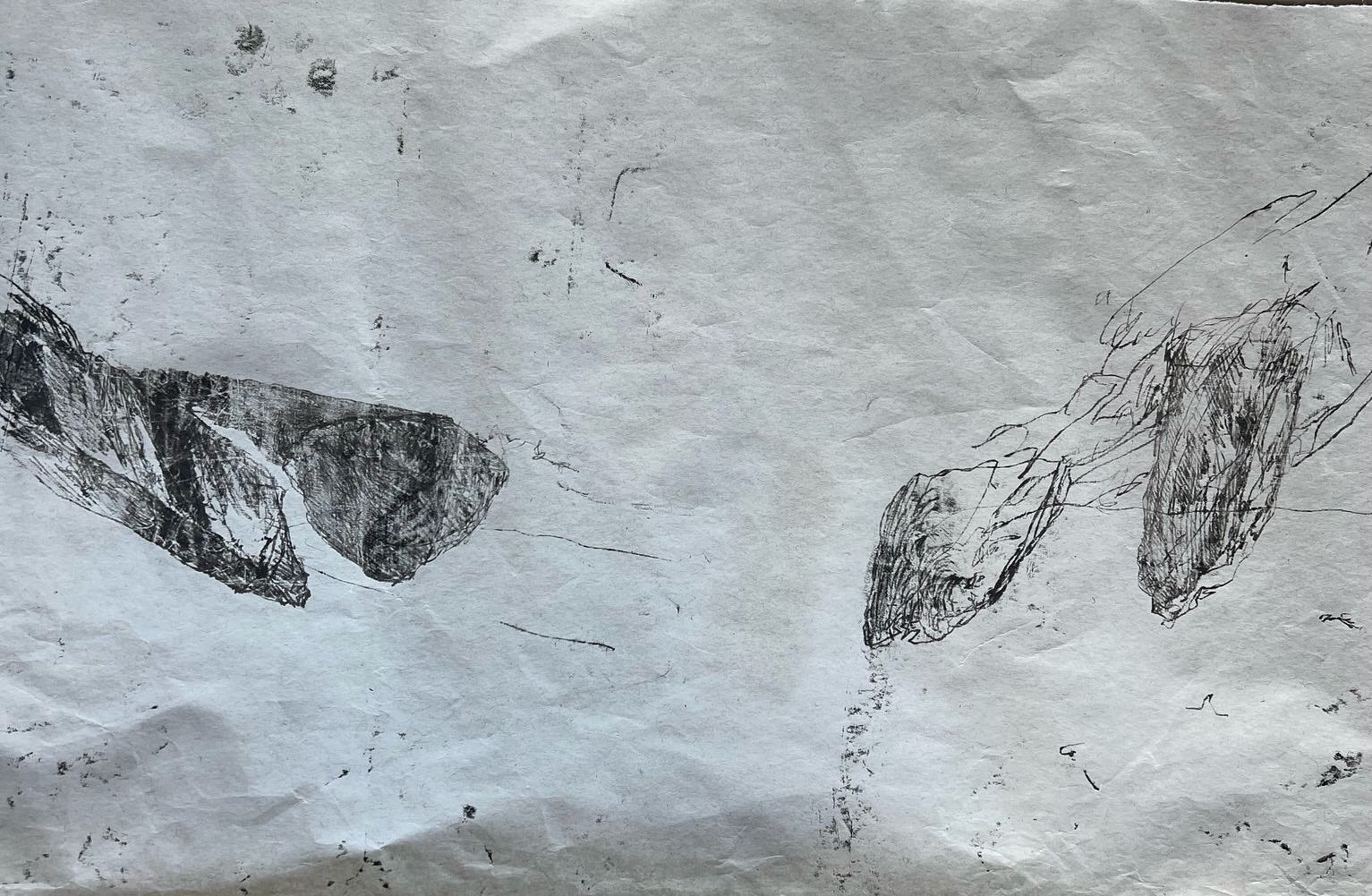
I feel I’ve known you a long time, but in terms of how you view yourself, I don’t know you at all. You remind me of someone I can't quite place. Your work seems to jump between references. I look at these paintings and I see figures, landscapes, churches. The shapes are reminiscent of religious images, storybook images, like looking through the windows of a castle, with a battle raging outside and a shrine within. Do you see these kinds of dualities in your work?
He looks around a bit and gestures to a wire fence held up by crumbling concrete posts which we begin to walk beside.
I don’t know if these references ‘jump’ so much as are entangled. Grasping emergent images or symbols like branches, sometimes finding them difficult to pass through. The roots are tethered, subterrenean and out of sight — but no less real. When I was a kid I read a story, The Wizard of Alderley Edge. In it there was a legend about a hundred knights sleeping under a hillside, ready to rise for when England was under attack. Something about the force of this image —that a whole army lay dormant to save the land from peril — almost brought me to tears. This idea has stuck with me since: a battle being protective but not patriotic, devotional but not religious.
I wanted to ask about your use of material references, I’ve seen you like to use touch as a starting point for image making. But first can I ask about the gestures these figures are making? I've seen you use your own portraits as reference photos? Are the gestures important in your paintings?
My background in illustration has impacted the prominence of gesture within my work. I see gesture as a way of physically grounding emotion. ‘The body is our general medium for having a world.’ My figures always act with intention, but by nature, gestures are only intimated to the viewer. Are they levitating or falling? Weightless or weighed down by the elements? Running away from or towards? Brutalised by their human opponents or by other forces?
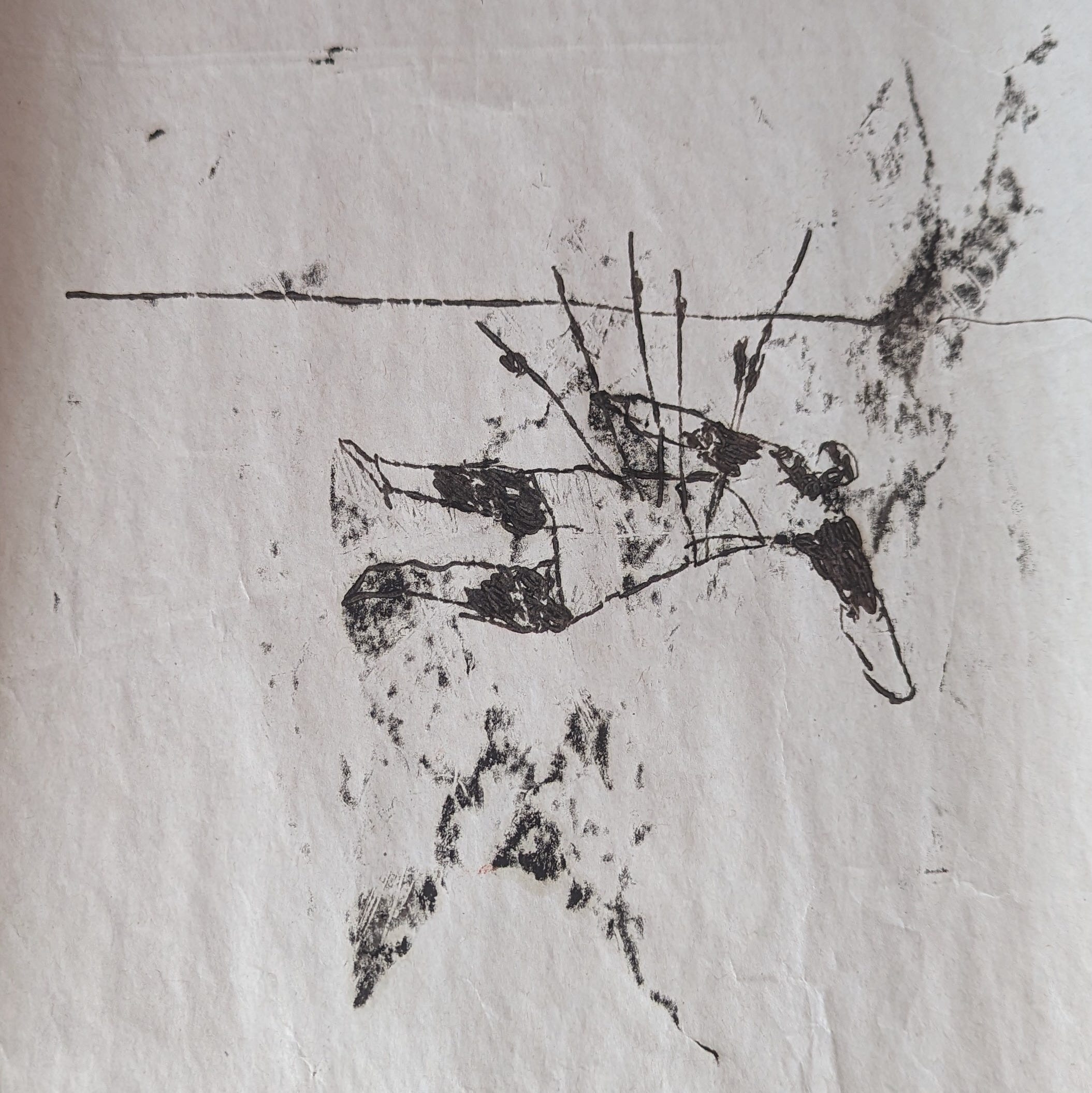
By this point, we’re walking steeply up a hill and I’m slightly out of breath. Out of the mist I can see the forms of small trees, bushes and birds emerging.
Does the landscape contain the human then or the human contain the landscape?
I think it must do, as the landscape is made from the same matter as we are. When I use oil paint, I turn everything into moving bodies. Clouds, seas, birds, sheep, people. Each brushstroke transfuses what I see as the fluidity of the world, the reciprocal drift between all things.
I think about how our window of consciousness is so fleeting— only something like seven seconds. The landscape and our environment are a way to extend this. People used to practice divination with sheep entrails, and I feel that art can even now be a kind of divination, using different materials but, still sourced from the land.
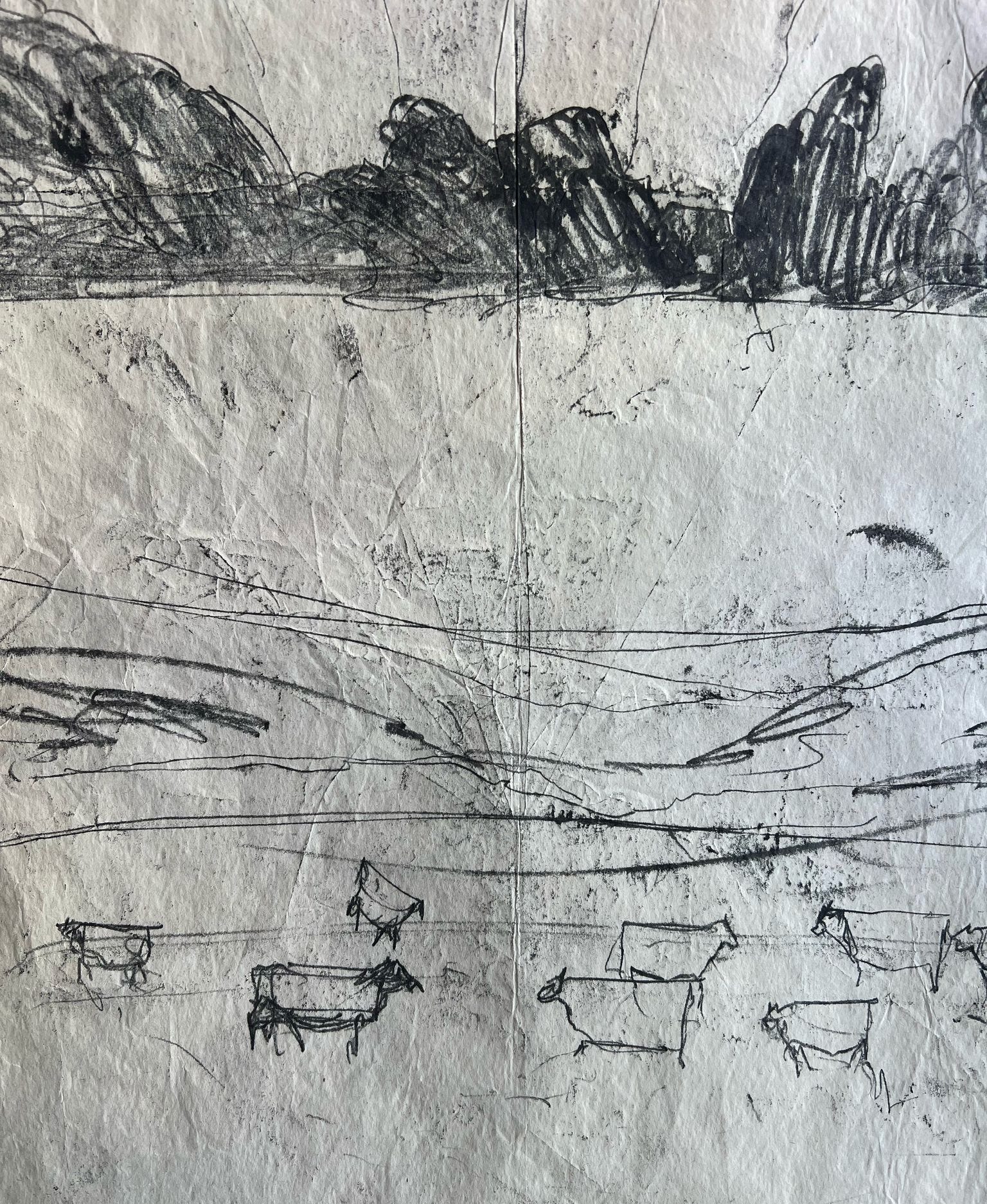
So when you’re witnessing rocks, feeling the wind and the landscape, does that feel like an extension of yourself or does it consume you?
My figures might seem burdened by the landscape, exhausted by the potentialities within it and ourselves. Rimbaud said infinity was the sky intermingled with the sea. Sometimes I look at the horizon and see a human scar with no beginning or end.